

How to: Make a Compression Joint on MDPE Pipe


 Back
Back
Compression fittings provide a simple and reliable method of joining MDPE (Medium Density Polyethylene) pipework for below-ground potable water services. When installed correctly, they create a watertight mechanical joint suitable for domestic, commercial and agricultural water supply installations.
This guide explains the correct installation procedure, highlights common installation mistakes, and outlines the relevant UK regulations and standards.
Tools and Materials Required
Before starting, ensure you have:
- MDPE pipe
- Compression fitting
- Compatible MDPE pipe insert (Stiffener)
- Pipe cutter
- Marker pen
- Tape measure
- Adjustable spanners / Plasson tool
- Deburring tool or sharp utility knife
Always use fittings and inserts recommended by the manufacturer and suitable for the pipe size being installed.
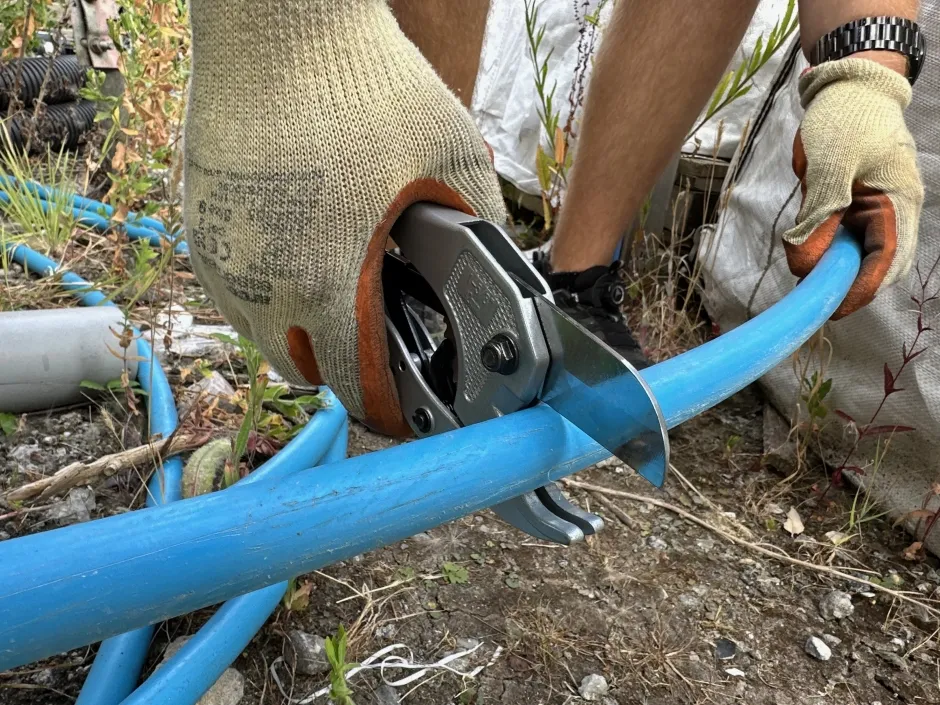
Step 1 – Cut the Pipe Square
Using a dedicated polyethylene pipe cutter, make a clean, square cut across the pipe.
A square cut allows the pipe to seat correctly against the internal stop within the fitting and helps ensure the O-ring forms an effective seal.
If a hacksaw must be used, select a fine-toothed blade and carefully remove all burrs and swarf from both the inside and outside of the pipe before assembly.
Step 2 – Mark the Insertion Depth
Before dismantling the fitting, measure the insertion depth and mark the pipe with a permanent marker.
This provides a simple visual check that the pipe has been fully inserted into the fitting during assembly. Insertion depths vary between manufacturers, so always refer to the fitting manufacturer's installation instructions.
Step 3 – Disassemble the Compression Fitting
Unscrew the cap nut and remove the compression ring (grab ring).
Slide the cap nut onto the pipe first, followed by the grab ring, ensuring it is fitted in the correct orientation with the gripping teeth facing the fitting body.
Incorrect assembly may prevent the fitting from gripping the pipe securely.
Step 4 – Fit the Pipe Insert
Insert the correct pipe stiffener fully into the end of the MDPE pipe until it sits flush.
Pipe inserts are essential for MDPE compression joints. They support the pipe wall during tightening and allow the O-ring to maintain an effective seal.
Never install a compression fitting without a compatible pipe insert unless the fitting manufacturer specifically states that one is not required.
Step 5 – Insert the Pipe into the Fitting
Push the pipe firmly into the fitting until it reaches the internal pipe stop.
Check that the insertion depth mark aligns with the face of the fitting, confirming that the pipe has been fully inserted.
A partially inserted pipe may not allow the grab ring or sealing components to function correctly.
Step 6 – Tighten the Compression Nut
Slide the grab ring into position and hand-tighten the cap nut.
Complete tightening using the manufacturer's recommended method. Most manufacturers specify tightening by hand followed by a measured amount with a spanner, although the exact number of turns varies between fitting designs.
Avoid over-tightening, as excessive force can damage the fitting, distort sealing components or make future maintenance difficult.
Step 7 – Inspect and Pressure Test
Inspect the completed joint to ensure:
- the pipe is fully inserted
- the cap nut is correctly tightened
- there is no visible damage to the fitting
Before any trench is backfilled, pressure test the installation in accordance with the relevant project specification and the water undertaker's requirements.
For new water supply pipework, pressure testing should follow the applicable UK industry guidance, such as the Water Industry Specification (WIS) requirements or the fitting manufacturer's installation instructions where appropriate. Test pressures and durations vary depending on the installation and should not be assumed to be a fixed value.
Common Installation Mistakes
Omitting the Pipe Insert
Failure to fit a pipe insert is one of the most common causes of leaking MDPE compression joints.
Without an insert, the pipe may deform under compression, preventing the sealing components from operating correctly.
Cutting the Pipe at an Angle
An uneven cut can prevent the pipe from seating fully inside the fitting and may result in an unreliable seal.
Always cut the pipe square using a suitable pipe cutter.
Failing to Remove Burrs
Rough edges can damage the sealing O-ring during assembly and prevent the pipe from seating correctly.
Deburr both the internal and external edges before installation.
Over-Tightening
Applying excessive force does not improve the seal.
Instead, it can damage plastic components, distort brass fittings and reduce the effectiveness of the sealing system.
Always follow the manufacturer's installation instructions.
Reusing Damaged Components
Compression fittings can often be reused if all components remain in good condition.
However, any fitting showing signs of damage, cross-threading, corrosion or distorted grab rings should be replaced.
Not Confirming Full Pipe Insertion
Failure to push the pipe fully home may prevent the sealing components from engaging correctly.
Marking the insertion depth before assembly provides a quick and effective installation check.
UK Regulations and Standards
Compression fittings used on drinking water installations should comply with the relevant UK regulations and recognised product standards.
For potable water systems, fittings should be approved for use under the Water Supply (Water Fittings) Regulations 1999 (and the equivalent regulations in Scotland, Wales and Northern Ireland where applicable).
Products are commonly approved through the Water Regulations Approval Scheme (WRAS), demonstrating suitability for contact with wholesome water.
When selecting compression fittings, look for:
- WRAS approval
- Manufacturer identification
- Pipe size marking
- Pressure rating appropriate for the installation
- Compliance with the relevant product standard, including BS EN ISO 17885 for mechanical fittings for polyethylene pressure pipe systems where applicable.
Installations should also comply with:
- Water Supply (Water Fittings) Regulations 1999
- Water Industry Specification (WIS) requirements where specified by the local water undertaker
- The installation guidance published by the relevant water company
Brass or Plastic Compression Fittings?
Both brass and plastic compression fittings are widely used across UK water supply installations.
Brass Fittings
Suitable where:
- increased mechanical strength is required
- fittings may be subject to repeated handling
- higher durability is preferred
Plastic Fittings
Advantages include:
- lower weight
- corrosion resistance
- competitive cost
- suitability for potable water when WRAS approved
Both types are commonly used on domestic service pipes, provided they are correctly installed and suitable for the application.
Frequently Asked Questions
Can MDPE compression fittings be buried underground?
Yes.
Compression fittings are specifically designed for below-ground water service installations. All joints should be pressure tested before backfilling, and some water companies may limit the use of underground joints or specify approved fitting types for new service connections.
Should I use PTFE tape?
Not on the compression nut.
The seal is formed by the fitting's internal sealing components rather than the threaded cap nut.
PTFE tape should only be used on threaded BSP connections where specified by the fitting manufacturer.
How do I choose the correct fitting size?
Compression fittings are sized to match the outside diameter of the MDPE pipe.
Common UK sizes include:
- 20mm
- 25mm
- 32mm
- 50mm
- 63mm
Never force mismatched pipe sizes into a fitting.
Can compression fittings be reused?
Often, yes.
Provided the fitting body, grab ring and sealing components remain undamaged, many compression fittings can be reused. If there is any doubt about the condition of the fitting, replacement is recommended.
What pressure are MDPE compression fittings rated for?
Many WRAS-approved compression fittings are rated up to PN16 (16 bar), although ratings vary by manufacturer and product range.
Always confirm the pressure rating within the manufacturer's technical documentation before installation.