

Twinwall Vs UPVC: Which Do You Need?
A Comparison of Twinwall and uPVC Drainage.


 Back
Back
Twinwall vs uPVC Drainage Pipe: Which Should You Use on Your Project?
Choosing the right drainage pipe is an important part of any construction or civil engineering project. With different materials, sizes and specifications available, it’s essential to understand which type of pipe is best suited to your installation.
Two options you may come across are twinwall drainage pipe and uPVC underground drainage pipe. Both have important roles in drainage systems, but they are designed for different applications.
In this guide, we explain the main differences between twinwall and uPVC drainage pipe and what to consider when choosing the right solution for your project.
What Is Twinwall Drainage Pipe?
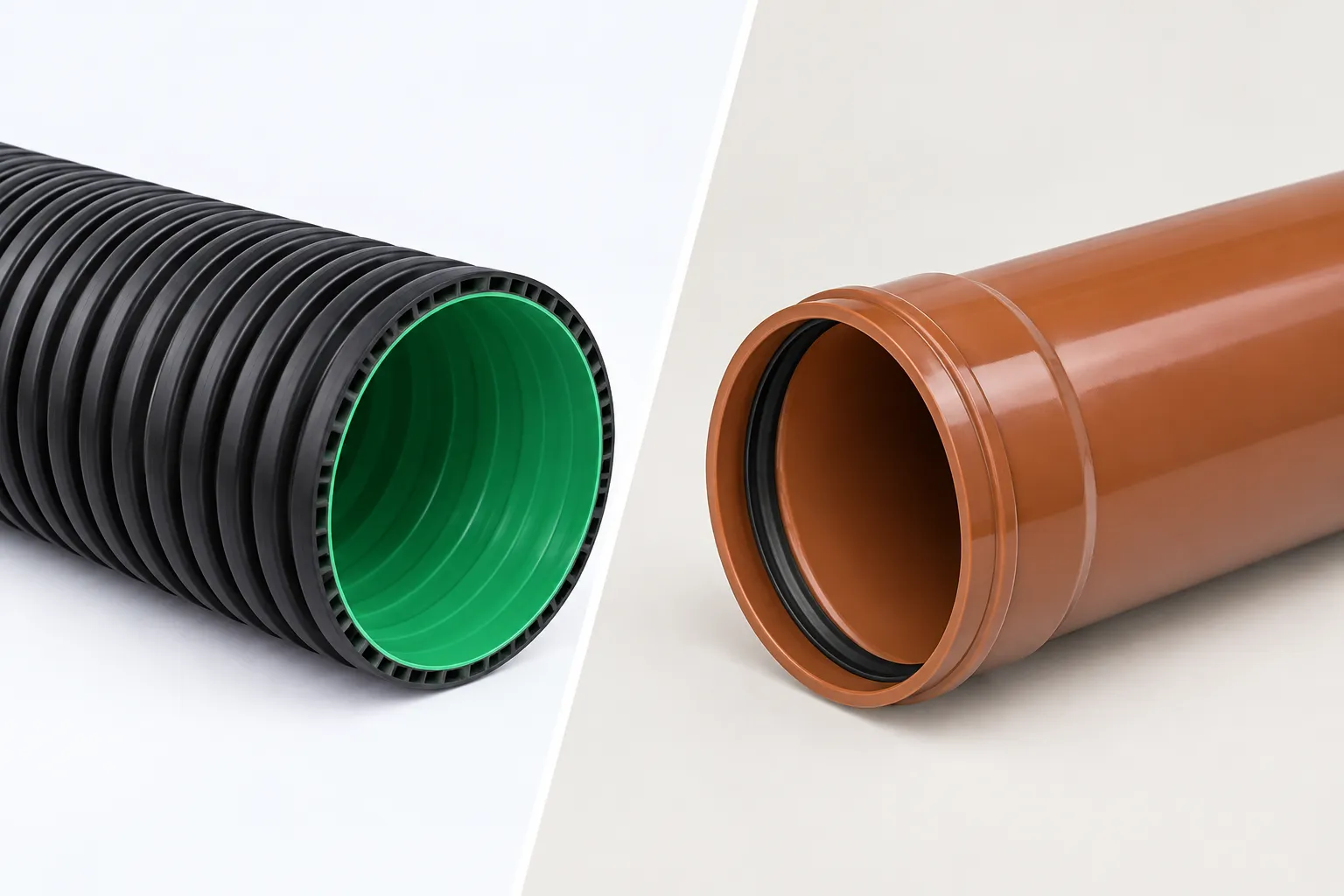
Twinwall drainage pipe features a corrugated outer wall and a smooth inner bore. This construction provides structural stiffness while allowing water to flow through the pipe.
Twinwall pipe is commonly used for surface water drainage on civil engineering, commercial and infrastructure projects. It is available in solid and perforated options, depending on the application.
Typical applications include:
- Surface water drainage systems
- Road and highway drainage
- Commercial developments
- Agricultural and landscaping projects
- Stormwater management systems
The correct pipe diameter and specification will depend on the expected water flow, ground conditions and installation requirements.
What Is uPVC Drainage Pipe?
uPVC (unplasticised polyvinyl chloride) drainage pipe is a rigid plastic pipe commonly used in underground foul drainage systems.
Its smooth internal surface helps water flow efficiently, while socketed connections and compatible fittings allow sections of pipe to be joined together.
Typical applications include:
- Domestic foul drainage
- Underground sewer connections
- Residential and commercial developments
- Connecting drainage chambers and other system components
uPVC drainage pipes are available in different diameters and stiffness classifications, allowing contractors to select a suitable product for the installation.
Twinwall vs uPVC: What Are the Main Differences?
Although both types of pipe can be used underground, their construction and intended applications differ.
1. Pipe construction
Twinwall pipe has a corrugated external wall and smooth internal bore. uPVC underground drainage pipe generally has a smooth wall construction.
2. Typical applications
Twinwall is widely used for surface water drainage, particularly on civil engineering and infrastructure projects. uPVC is commonly used for foul drainage, sewer systems pipework.
3. Water collection
Twinwall pipe is available in perforated versions that allow water to enter through openings in the pipe wall. Solid twinwall pipe carries water between drainage points.
uPVC drainage pipe is generally used to convey water through a sealed drainage network rather than collect groundwater through perforations.
4. Sizes and connections
Both pipe types are available in different sizes and require compatible fittings. However, dimensions, jointing methods and accessories vary by product and manufacturer, so compatibility should always be checked before ordering.
How Do You Choose the Right Drainage Pipe?
The best option depends on the requirements of your project. Before making a decision, consider the following factors.
Type of drainage: Establish whether the system needs to carry foul water, surface water or groundwater collected through a land drainage system.
Ground conditions and loading: Consider burial depth, soil conditions and whether the pipe will be installed beneath roads, driveways or other trafficked areas.
Pipe diameter and capacity: The pipe must be correctly sized for the expected flow and the drainage system design.
Installation requirements: Check the required bedding, backfill, connections and installation method in the manufacturer’s guidance.
Project specification: Always confirm that the selected pipe meets the design requirements and any applicable standards.
Choosing a pipe based on price alone can lead to compatibility issues or an unsuitable installation. The correct specification is essential for reliable long-term performance.
Frequently Asked Questions
Is twinwall pipe better than uPVC drainage pipe?
Neither is automatically better. Twinwall is commonly used for surface water drainage on infrastructure projects, while uPVC is widely used for underground foul and surface water drainage. The right choice depends on the application and project specification.
Can twinwall pipe be used for surface water drainage?
Yes. Twinwall drainage pipe is commonly used for surface water management. Solid and perforated options are available, depending on whether the system needs to convey water or collect it from the surrounding ground.
Can twinwall and uPVC pipes be connected together?
Connections may be possible using suitable adaptors or compatible fittings. Always check the pipe dimensions, jointing system and manufacturer’s guidance before connecting different pipe types.
What size drainage pipe do I need?
The required diameter depends on the expected flow, the drainage layout and the project specification. For designed drainage systems, pipe sizing should be confirmed by a competent designer.
Finding the Right Drainage Products
Selecting the right drainage pipe helps ensure your system is suitable for its intended purpose, site conditions and expected loading.
At United Civils Supplies, we supply a range of twinwall drainage pipes and fittings and underground sewer drainage pipes and fittings for civil engineering, construction and surface water management projects.
Explore our range to find suitable products for your next project, and always check the relevant technical specifications before ordering.