
Solar Farms: We Can Help
How United Civils Supplies can support your solar farm project.


 Back
Back
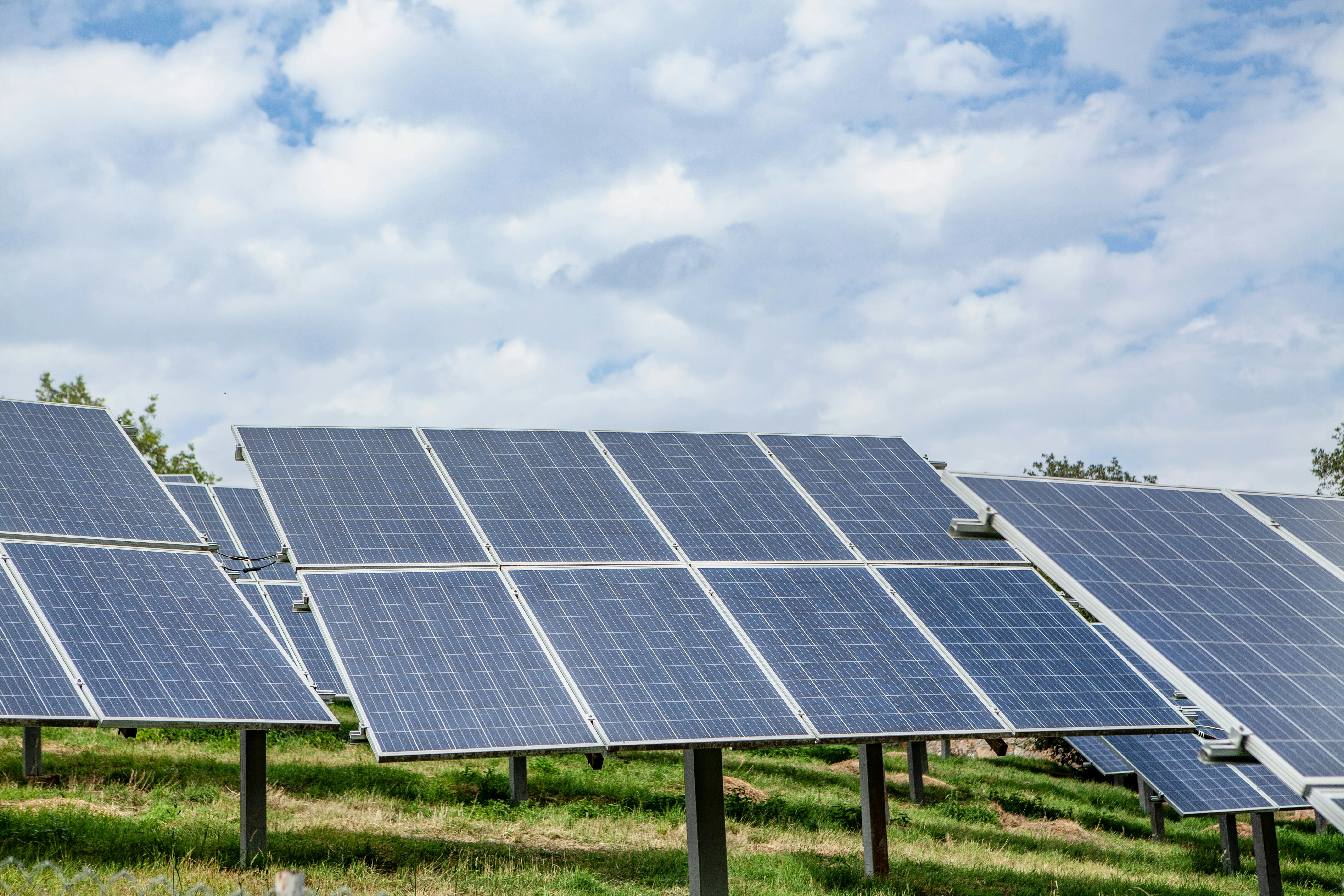
Solar farms are becoming an increasingly important part of the UKs renewable energy infrastructure. While the panels, mounting systems and electrical equipment are the most visible parts of a solar farm, a huge amount of work happens beneath and around them.
From preparing the ground and building access tracks to installing drainage, cable ducting and inspection chambers, the civils work provides the infrastructure that allows a solar farm to be built, connected and maintained.
For large solar-farm projects, these elements all need to work together. Cable routes need to be coordinated with drainage and foundations, access tracks need to cope with construction and maintenance traffic, and ground conditions can influence everything from piling to drainage and reinforcement.
In this guide, we'll look at the key civils considerations when developing a ground-mounted solar farm in the UK, as well as some of the products we supply for these applications.
Ground Conditions and Site Preparation
Soil conditions, groundwater, existing drainage, flood risk and environmental constraints can all influence how the site is developed. Solar farms are often constructed on large areas of open or agricultural land, so it's important to minimise unnecessary disturbance and work with existing drainage wherever possible.
Where additional ground support is required, geotextiles and geogrids can be incorporated into access tracks and other areas. Depending on the application, these products can provide separation, filtration or reinforcement.
We supply a range of woven and non-woven geotextiles and geogrids for use across civil engineering and groundworks projects.
Choosing the right product is important and should always be based on the ground conditions and engineering requirements of the project.
Access Tracks and Ground Reinforcement
Reliable access is essential during both construction and the operational life of a solar farm.
Construction vehicles can include heavy delivery vehicles, excavators and other plant, while maintenance teams will need access to panels, inverters, substations and other infrastructure once the site is operational.
Access tracks therefore need to be designed around the site's ground conditions, expected loading and drainage requirements.
Geotextiles can help separate aggregate from the underlying soil, while geogrids can provide additional reinforcement where required. Drainage is just as important. Standing water can weaken a track formation and contribute to rutting and erosion.
The aim is to create a durable access route while managing water effectively across the site.
Understanding the Difference Between Woven and Non-Woven Geotextiles
Drainage and Surface-Water Management
Water management is one of the most important considerations when planning the civils for a solar farm.
Construction can change existing drainage patterns, while new access tracks, compounds and cable trenches can affect how rainfall moves across the site. A drainage strategy may therefore combine land drainage, surface-water pipes, inspection chambers, soakaways and attenuation systems.
Land drainage
Where groundwater or persistently wet ground is an issue, perforated land drain can collect water from the surrounding soil and direct it towards an appropriate outlet.
We supply perforated, unperforated and wrapped land drain in a range of diameters, along with connectors, junctions, end caps and filter socks.
Perforated pipe allows surrounding water to enter the drainage system, while solid pipe is generally used to carry collected water to another location without allowing additional groundwater into the pipe.
Twinwall drainage
Twinwall drainage can be used to transport surface water around the site.
Our range includes twinwall drainage in a variety of diameters, with solid and perforated as well as bends, junctions, couplers and sealing rings.
The correct diameter and configuration will depend on the design, expected flows and site conditions.
Soakaways and attenuation
Where site conditions allow, infiltration systems such as soakaways can be used to manage surface water. Attenuation systems can provide temporary storage and controlled discharge.
We supply attenuation and soakaway crates, flow controls and larger-diameter drainage products for surface-water management applications.
The right approach will depend on factors such as ground permeability, groundwater levels, flood risk and discharge requirements.
Solar Panel Foundations
The foundations supporting the solar panels are another important part of the civils design.
Many ground-mounted solar systems use driven steel piles or other engineered foundation systems rather than conventional concrete foundations. The appropriate solution will depend on the site's geotechnical conditions, terrain and the requirements of the mounting system.
Accurate setting out is particularly important. Panel rows, foundations, access tracks, drainage and cable routes all need to be coordinated to avoid clashes and unnecessary rework.
Underground services should also be considered before piling or foundation installation begins.
Underground Electrical Ducting
A significant part of the underground infrastructure is associated with the solar farm's electrical system.
Power generated by the panels needs to travel to inverters, transformers and ultimately the substation or grid connection. On larger sites, this can mean extensive underground cable routes.
Cable ducting provides a defined and protected route for these cables.
We supply a range of underground electrical ducting, including black twinwall electric cable ducting, smooth electric cable duct and larger ENATS power cable ducting.
Duct selection needs to take into account the cable specification, cable diameter, number of cables, installation depth, loading requirements and the overall project design.
It's important not to assume that the largest available duct is automatically the right choice. The duct needs to be suitable for the cable system and its installation conditions.
Protecting and Identifying Underground Services
A solar farm can contain extensive networks of buried electrical and drainage infrastructure, so identifying those services is important both during construction and throughout the site's operational life.
We supply accessories including duct drawcord, tracer wire, warning marker tape, detectable mesh and duct access boxes.
Drawcord can assist with cable installation, while marker tape, detectable mesh and tracer wire can help identify underground infrastructure once trenches have been reinstated.
Accurate as-built records are equally important. Recording where ducts, cables, drainage and chambers have been installed makes future maintenance and excavation work much safer and easier to plan.
Chambers and Drainage Access
Inspection chambers provide access to underground drainage for inspection and maintenance.
We supply chamber bases, risers, covers and associated components, including 315mm and 450mm chamber systems. Our Knowledge Hub explains how inspection chambers can be used at changes in direction, gradient and junctions, as well as other locations where maintenance access is required.
Inspection Chambers Explained: A Complete Guide
Access chambers can also form part of underground duct systems.
Cover selection is particularly important on a solar farm. A chamber located within an access track will have different loading requirements from one in an area without vehicle traffic.
We provide guidance on common cover load classifications, including A15, B125 and D400, helping customers select products appropriate for their installation environment.
Bringing the Civils Design Together
One of the biggest considerations when working on a solar farm is the amount of infrastructure that needs to coexist across a large site.
Drainage needs to work around cable routes. Cable routes need to avoid foundations and other services. Access tracks need to provide reliable vehicle access while also allowing surface water to be managed. Ground reinforcement needs to reflect the actual site conditions, while chambers and access points need to remain accessible for maintenance.
This is why we always recommend looking at the civils package as a whole rather than treating each element as a separate installation.
Our range covers many of the key product categories involved, including land drainage, twinwall drainage, underground electrical ducting, inspection and access chambers, geotextiles, attenuation systems and underground-service accessories.
Building the Right Civils Infrastructure
A solar farm depends on much more than its panels and electrical equipment. The groundworks and underground infrastructure provide the physical foundation for the entire development.
For us, good solar-farm civils come down to planning the site as a complete system. Ground conditions, drainage, access, foundations and underground services all need to be considered together from the earliest stages.
We work with contractors and customers across these areas, supplying products ranging from land drain and twinwall pipe to electrical ducting, chambers, geotextiles and surface-water management systems.
The right product will always depend on the project design, site conditions and installation requirements, so it's important to select and install materials in accordance with the relevant specification and manufacturer's guidance.
When the civils package is properly considered from the outset, it provides the solid foundation a solar farm needs — from initial construction through to its long-term operation.
All product selection and installation should be based on the project specification, site conditions, manufacturer's guidance and applicable UK requirements.