

Understanding Land Drain


 Back
Back
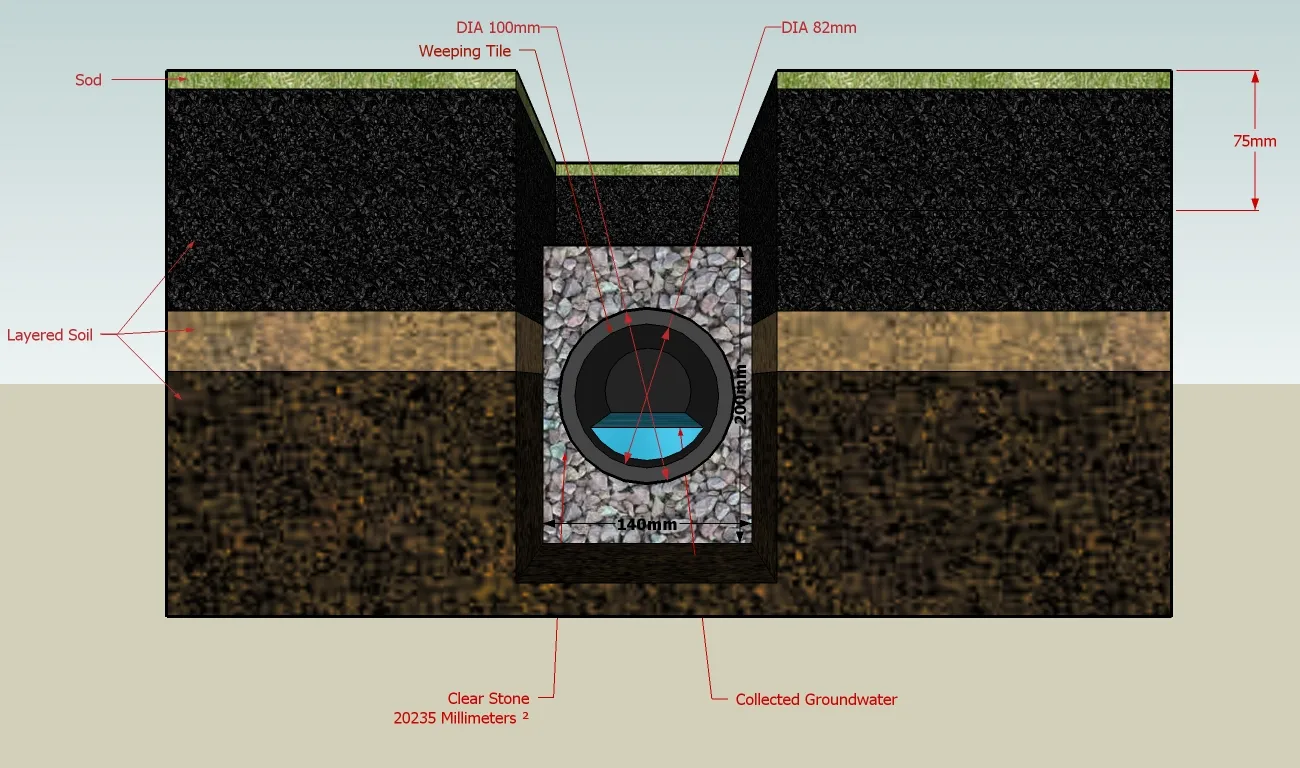
Land drainage, sometimes known as a French drain, is a below-ground pipe system designed to redirect and manage excess surface or groundwater. By improving soil conditions and preventing waterlogging, land drainage helps protect property, enhance land usability, and support effective water management across a wide range of applications.
Available in a variety of diameters and coil lengths, land drainage pipe is used everywhere from small garden projects and landscaping schemes to large-scale sports fields, commercial developments, and agricultural land.
Types of Land Drainage Pipe
There are two main types of land drainage pipe: perforated and unperforated. While they look similar, they perform different roles depending on the site conditions and drainage requirements.
Perforated Land Drainage
Perforated pipe features small holes or slots throughout its length. These openings allow groundwater and surface water to enter the pipe and be carried away, reducing waterlogging in the surrounding soil.
In some installations, the pipe can also help redistribute water evenly along its run, allowing the ground to drain naturally at a controlled rate.
Typical uses include:
- Agricultural fields prone to waterlogging
- Garden and landscape drainage
- Sports pitches and recreational grounds
- Around building perimeters to protect foundations
Unperforated Land Drainage
Unperforated land drainage pipe is a solid, sealed pipe without holes. Instead of collecting water from the ground, it’s used to carry collected water from one location to another — for example, from a perforated system to a final outlet.
Common applications include:
- Transporting water to a soakaway, attenuation tank, or watercourse
- Linking sections of a wider drainage network
- Connecting to surface water gullies or stormwater systems
Unperforated pipe is often used at the end of a drainage system, once the water has been gathered by perforated drains.
Land drainage pipe is available in diameters typically ranging from 60mm to 160mm for most domestic and agricultural applications, and up to 600mm for larger civil or commercial schemes. Pipes can be supplied in coils for flexibility or rigid lengths for deeper or more structural installations.
Choosing the Right System
When planning land drainage, consider:
- Soil type – clay soils may need more extensive systems
- Water source – whether groundwater or surface runoff
- End discharge point – ensuring compliance with Environment Agency or local authority rules
- Load requirements – heavier-duty twin-wall pipes may be needed for driveways or access roads
Summary
Land drainage pipe plays a vital role in managing water effectively. By selecting the right type — perforated or unperforated — and ensuring proper installation, landowners, builders, and landscapers can prevent waterlogging and protect structures.